Sorting by size: a sieve
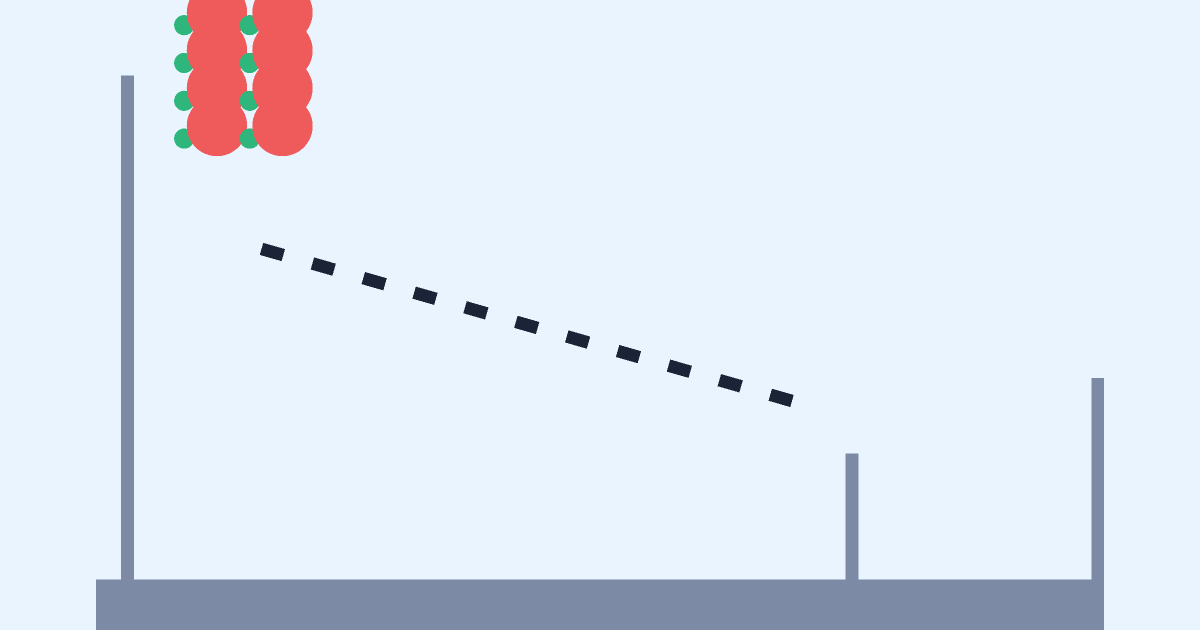
Small and large balls pour onto a tilted grate. The small ones drop into the left bin, the big ones roll on to the right.
2D
Age 6+10 min
ProbabilityGravityMachines & mechanisms
Loading simulation…
Press “Run”. Bodies move by the laws of physics: gravity, friction, elasticity.
What the experiment shows
The gaps in the grate are wider than the small balls but narrower than the big ones. Factories sort gravel, grain and potatoes this way — with no people or sensors.
How to run it
- Press “Run” and see where each ball lands.
- Make the gaps wider — what ends up in the left bin?
- Tilt the sieve more: do small balls still have time to fall through?
Questions to discuss
- How do you separate grain from debris in the kitchen?
- Why do big balls sometimes get stuck?
The science
A sieve is a mechanical size filter. On a slope each ball gets to ‘try’ several gaps. A steeper slope speeds up the flow but causes more sorting errors.
Try it at home
Mix peas and rice and sift them through a colander: what stays inside?
What to change in the editor
- Add medium-sized balls.
- Add a second sieve layer.