A weight on a spring: heavier means slower
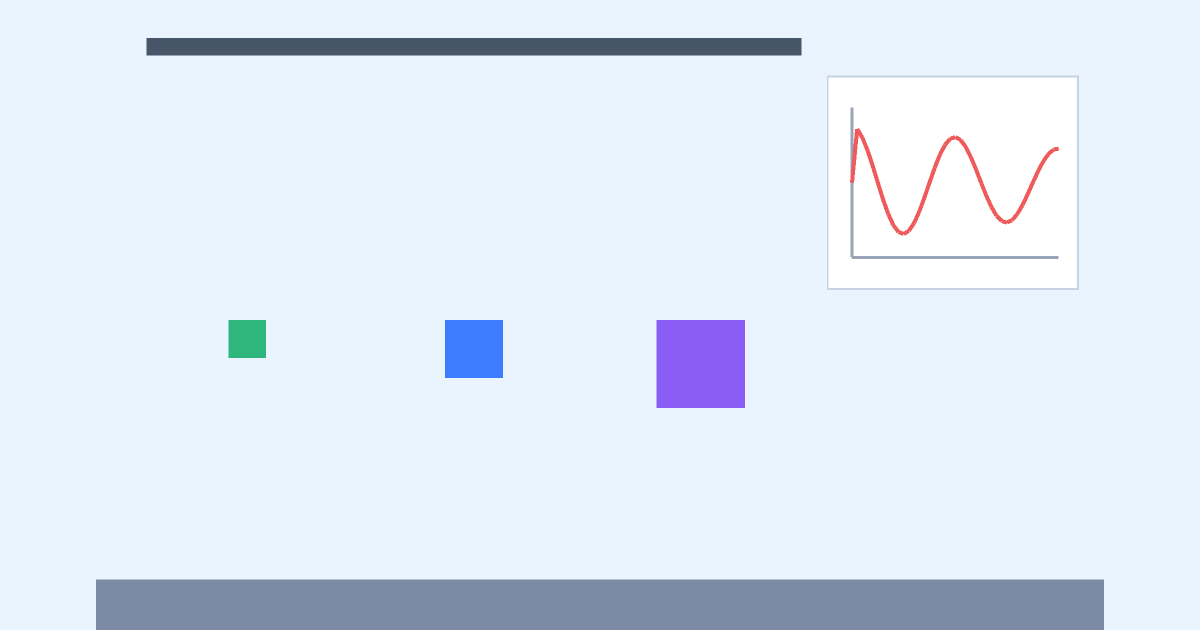
Three weights of 0.25, 1 and 4 kg bob on identical springs. The light one is quick, the heavy one slow, and the chart shows the period.
2D
Age 10+10 min
OscillationsElasticity
Loading simulation…
Press “Run”. Bodies move by the laws of physics: gravity, friction, elasticity.
What the experiment shows
The period depends on the mass and the spring stiffness, not on how far we pull. Four times the mass makes the period twice as long.
How to run it
- Press “Run”: all three weights are pulled down equally and released.
- Count how many swings each weight makes in 5 seconds.
- Read the period on the chart for the middle weight.
Questions to discuss
- How many times longer is the heavy weight’s period than the light one’s?
- Does the period change if you pull farther?
The science
A spring pendulum’s period is T = 2π·√(m/k). For k = 100 N/m: 0.25 kg → 0.31 s, 1 kg → 0.63 s, 4 kg → 1.26 s. A heavier mass is harder to accelerate, so it swings slower; a stiffer spring pulls back faster, so the period is shorter.
Try it at home
Hang a small jar from a rubber band, pull it and let go. Add water — the swings get slower.
What to change in the editor
- Set k = 400 — the period halves.
- Set damping to 0 and the swings never fade.