2DAge 5+10 min
Bouncing balls: what is elasticity
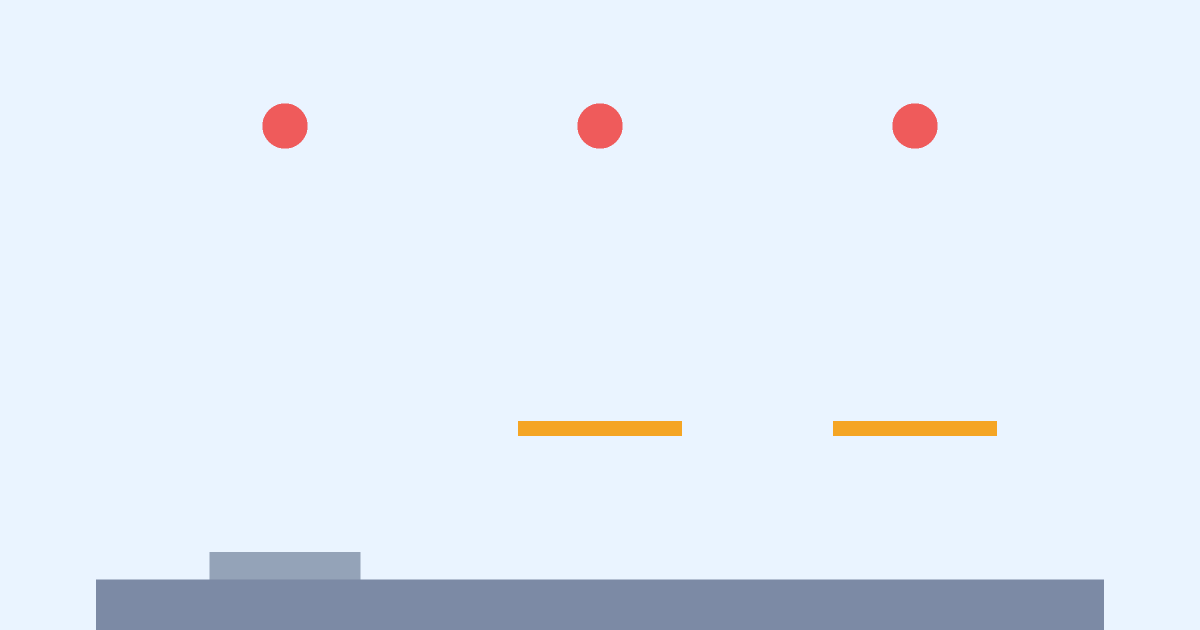
Three balls fall from the same height but bounce differently. A simple physics experiment for kids 5+: elasticity, energy and rebound.
Interactive experiments for kids, students and teachers. Run each one right on the page, then open a copy in the Tymora editor and change mass, friction, elasticity or gravity. Every experiment comes with discussion questions and a version to try at home.
Three balls fall from the same height but bounce differently. A simple physics experiment for kids 5+: elasticity, energy and rebound.
Three balls fly at the goal with different speeds: one into the net, one off the crossbar, one over. The net turns green on a goal.
Weights of 0.5, 1 and 2 kg and one unknown hang on identical springs. A spring stretches in proportion to the load, so the ruler reveals the mass.
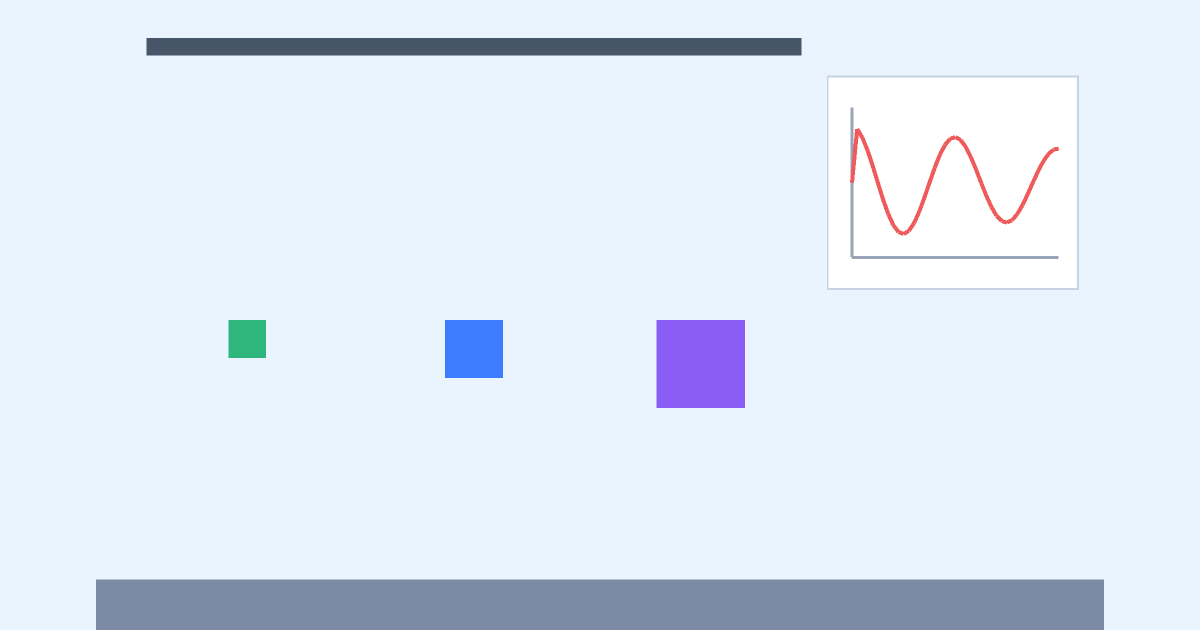
Three weights of 0.25, 1 and 4 kg bob on identical springs. The light one is quick, the heavy one slow, and the chart shows the period.
The same ball falls onto the floor, a soft trampoline and a stiff one. On the floor it stops dead; on the trampolines it bounces up again.
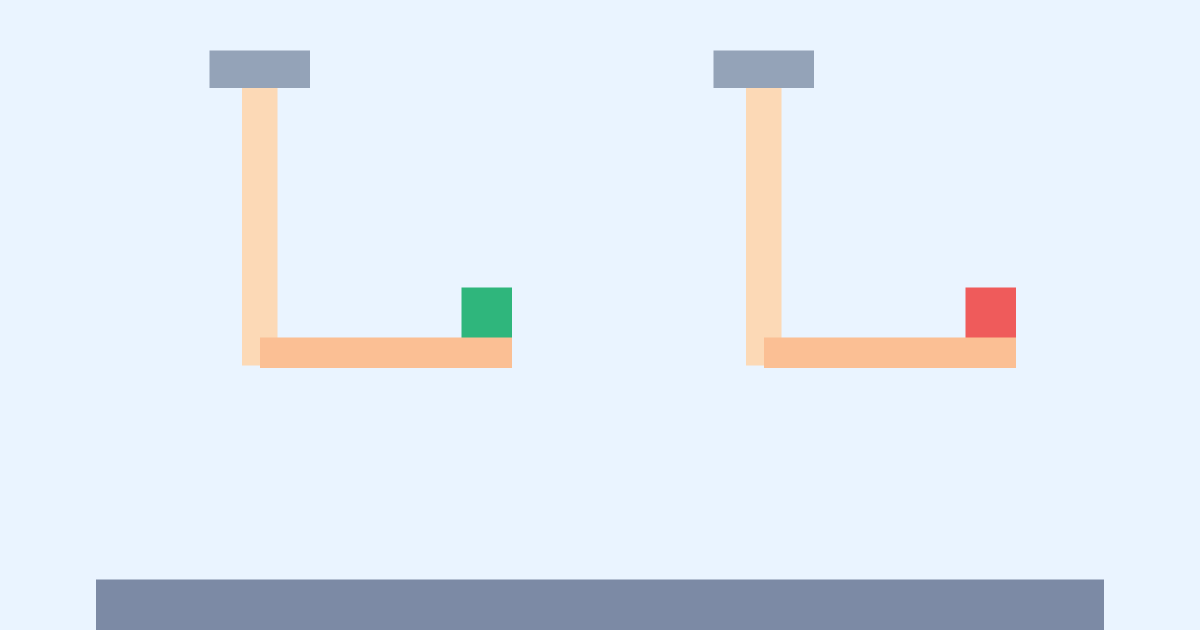
A forearm holds 1 kg and 3 kg in the hand. The muscle attaches close to the elbow, so it pulls several times harder than the load weighs.
Three identical cannons with springs of different stiffness fire at 45°. The stiffer the spring, the farther the ball goes: twice as stiff, roughly twice as far.
Three doors get the same push. With no closer the door stays open, with a spring only it rushes back and bangs, and with a spring and a damper it closes smoothly.
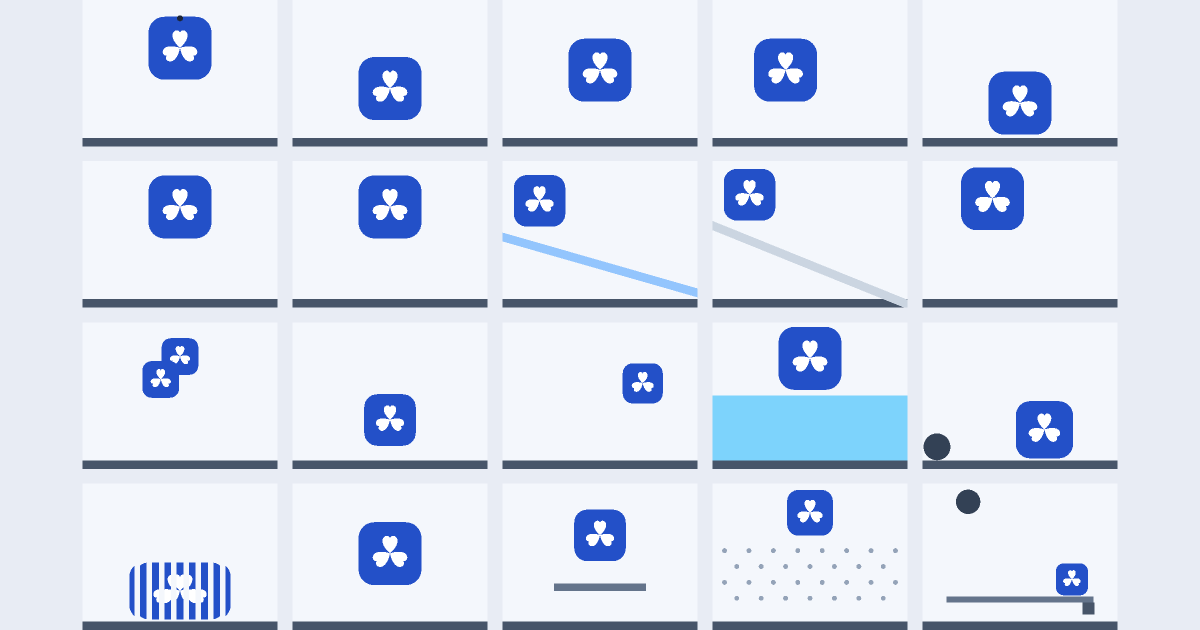
One project, 20 frames, each with the Tymora logo and its own physics: Moon, zero gravity, ice, pendulum, spring, water, dominoes and more.