2DAge 10+15 min
Launch angle: which angle flies farthest
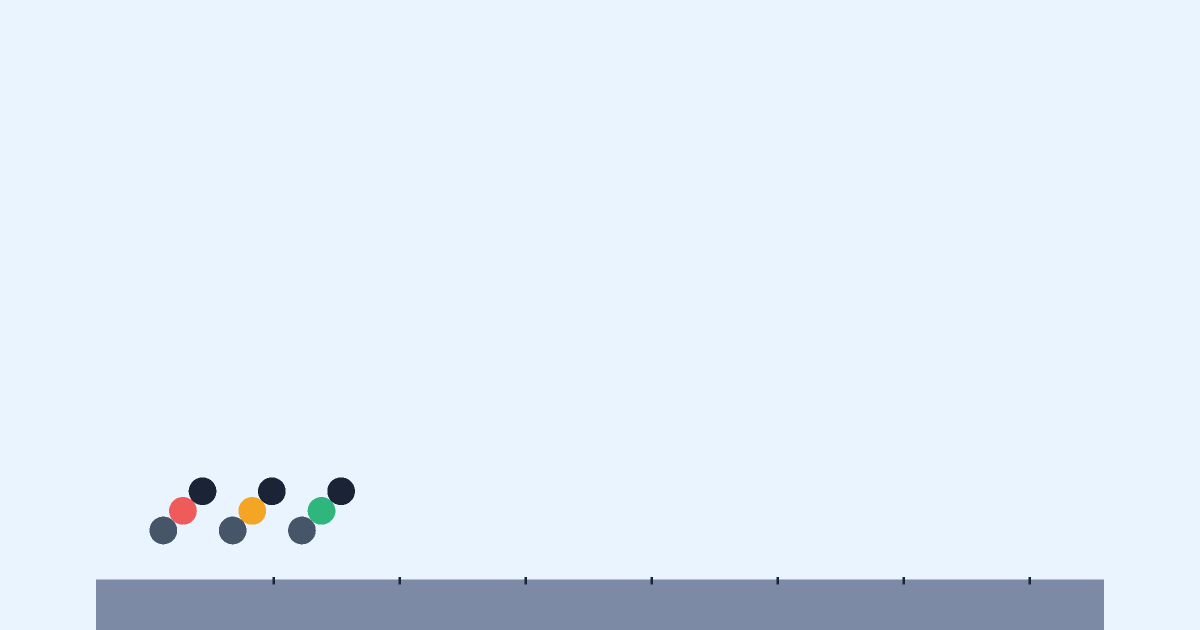
Three balls start at the same speed at 30°, 45° and 60°. Their paths and ranges are traced — a projectile motion experiment.
Interactive experiments for kids, students and teachers. Run each one right on the page, then open a copy in the Tymora editor and change mass, friction, elasticity or gravity. Every experiment comes with discussion questions and a version to try at home.
Three balls start at the same speed at 30°, 45° and 60°. Their paths and ranges are traced — a projectile motion experiment.
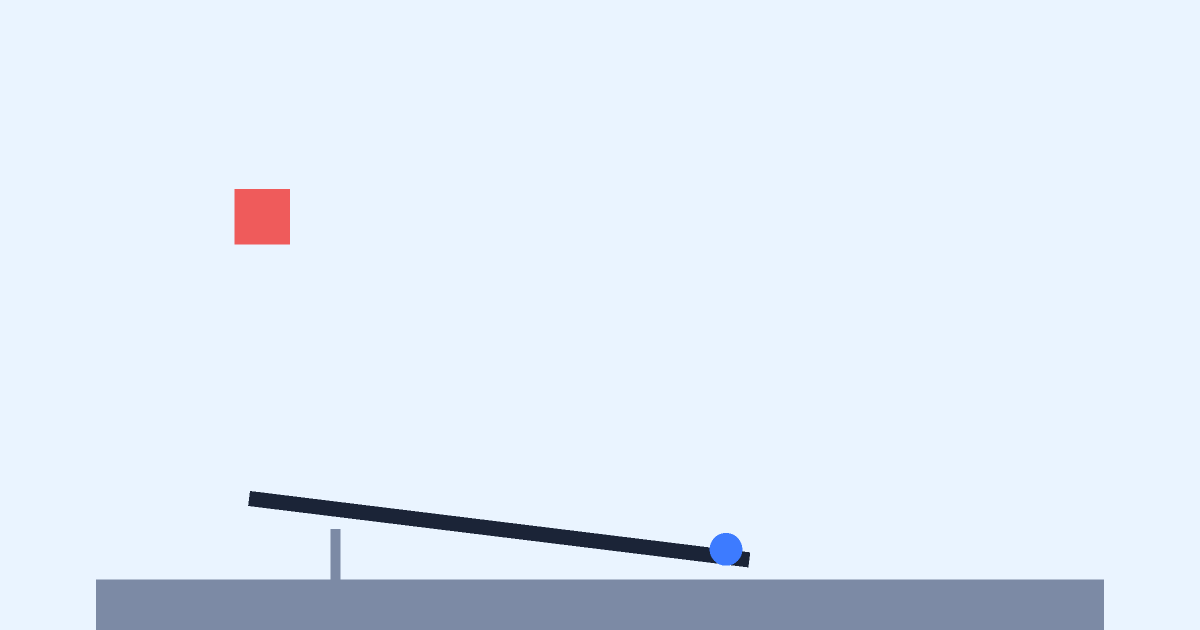
A heavy weight drops onto the short arm of a lever and throws a light ball from the long one. A levers and energy experiment for kids 9+.
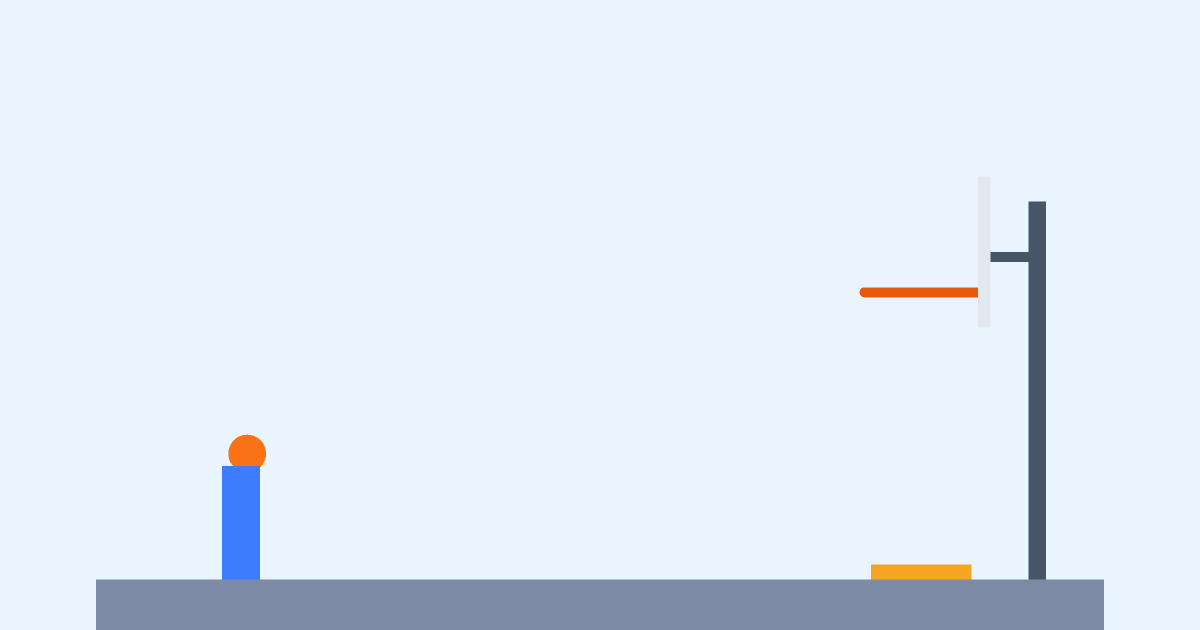
A ball flies along a parabola toward the hoop. Tune the speed and angle; the sensor under the basket turns green on a score.
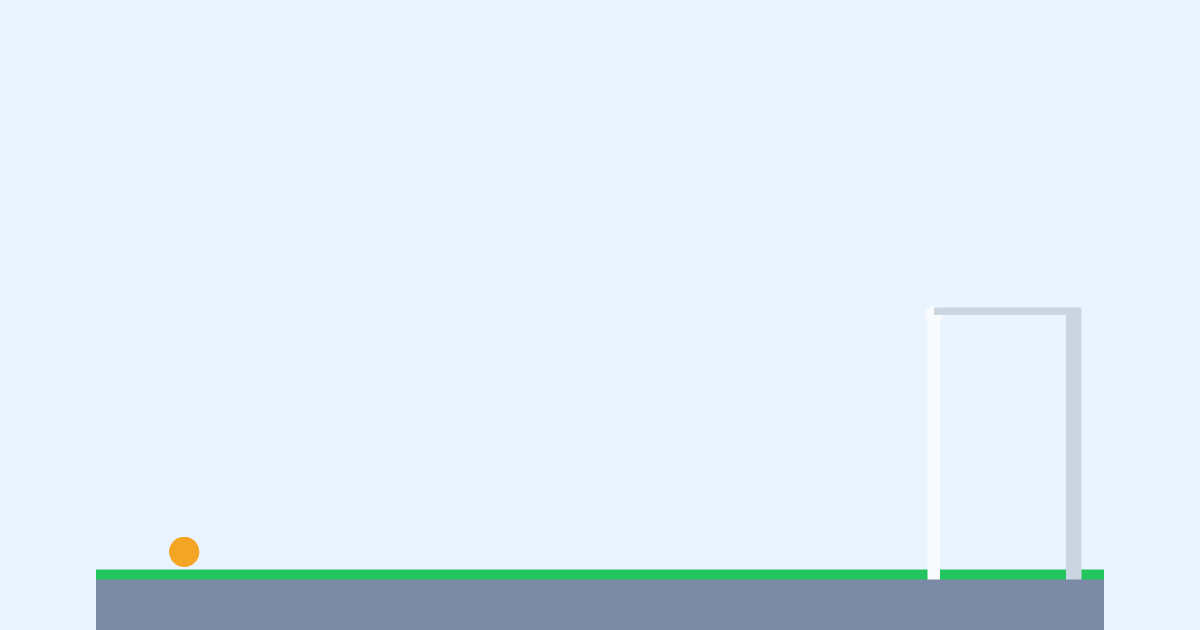
Three balls fly at the goal with different speeds: one into the net, one off the crossbar, one over. The net turns green on a goal.
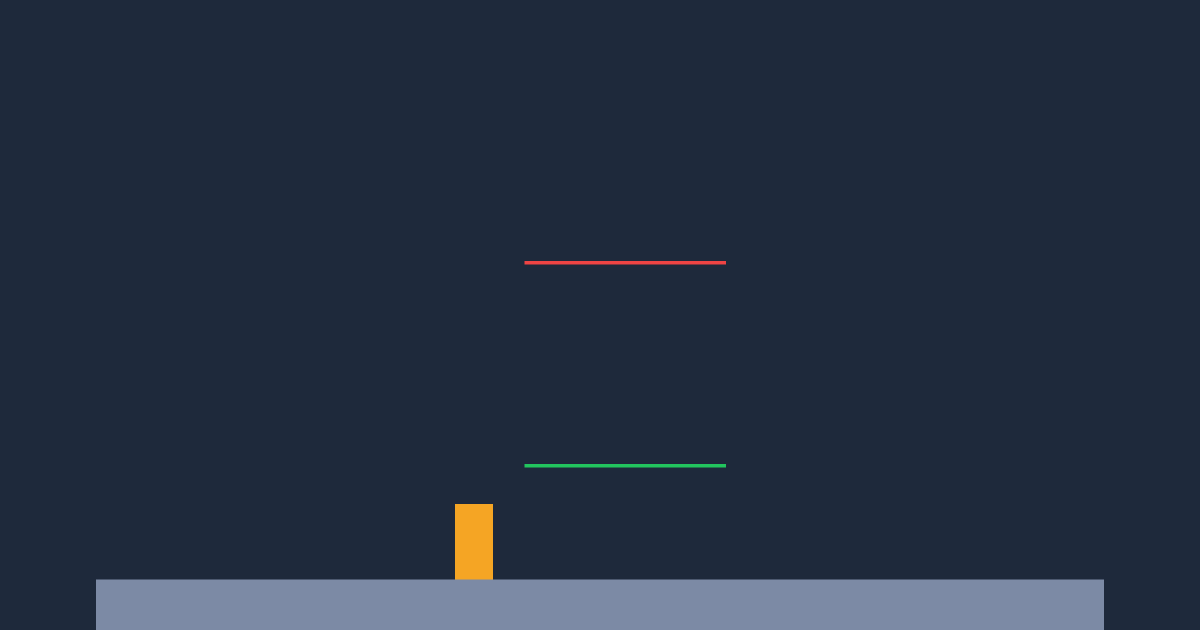
A boy jumps at the same speed as on Earth, but gravity here is lunar (1.62 m/s²). Marks show the jump height on Earth and on the Moon.
Three identical cannons with springs of different stiffness fire at 45°. The stiffer the spring, the farther the ball goes: twice as stiff, roughly twice as far.
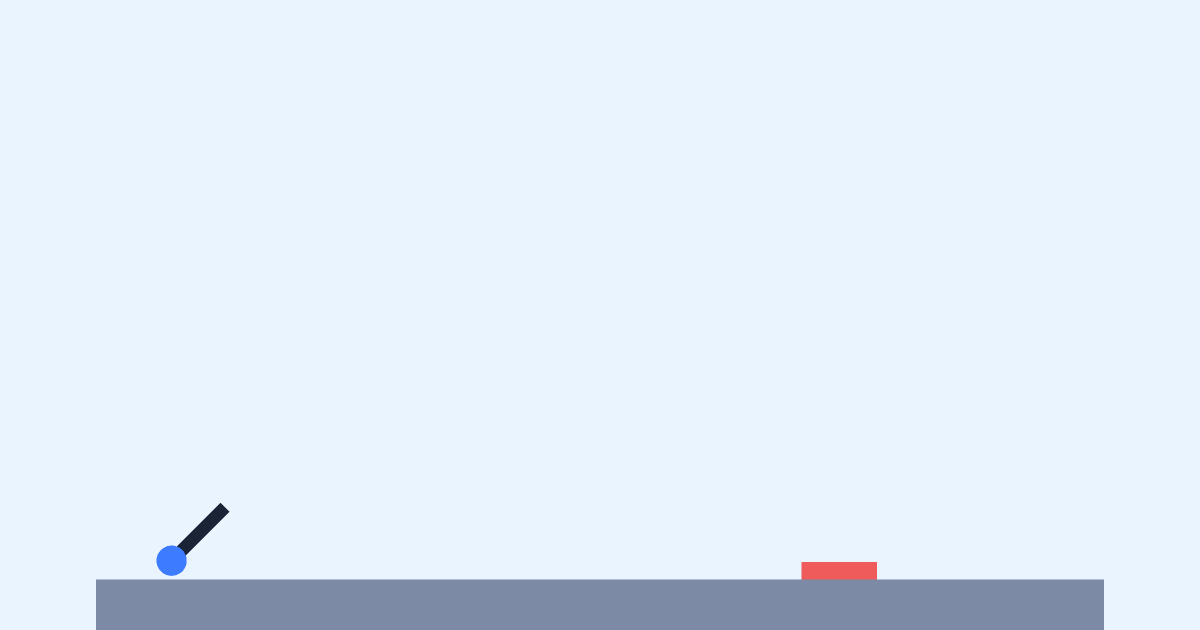
Change the angle and speed with sliders and watch the path change. Captions show the time, the ball position and the range from the formula.